Fashion's AI future: Innovation without losing the human touch
Bijgewerkt op: 8 sep
Artificial intelligence is no longer waiting at the door of the fashion industry. It is already inside.
Artificial intelligence is rapidly becoming part of the fashion media landscape. From AI-generated visuals and virtual models to personalised content and trend forecasting, AI is changing how fashion content is created, distributed and consumed. For fashion media brands, this development offers opportunities for efficiency and innovation, but it also raises important questions about authenticity, representation and audience trust.
The controversy surrounding Vogue's publication of the Guess advertisement featuring AI-generated models illustrates this tension. While AI can help brands create content faster and at lower costs, audience reactions show that technological innovation does not automatically lead to positive perceptions (Chitrakorn, 2025; Roberts-Islam, 2025).
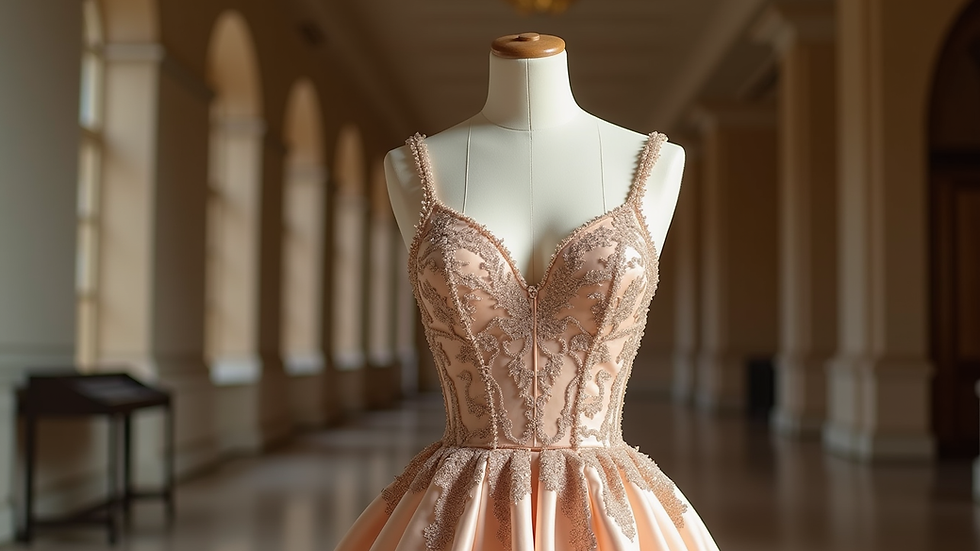
AI is becoming part of fashion communication.
Fashion magazines have continuously adapted to technological developments, from print and photography to digital platforms and social media (IFB, 2024). AI represents another stage in this evolution.
AI can support faster content production, personalised experiences and trend analysis, allowing fashion media to respond more quickly to changing audience behaviour and emerging trends (Team, n.d.). However, fashion communication is not only about efficiency. Traditional fashion imagery is built around collaboration between models, photographers, stylists and other creative professionals, creating storytelling and emotional connection that audiences associate with fashion media (Summerlove, 2025).
For this reason, AI should support human creativity rather than completely replace it. The strongest approach may be one in which technology improves creative possibilities while people remain central to concept development, storytelling, and artistic expression.
The Vogue case revealed that transparency matters
One of the most important lessons from the Vogue and Guess case is the importance of clear communication. Although the advertisement included a disclosure that AI had been used, the information was presented in small and easily overlooked text. There was little further explanation about why AI-generated models were used or how the campaign was created (Roberts-Islam, 2025).
This creates challenges for authenticity and trust. As AI-generated images become increasingly realistic, audiences may struggle to distinguish between real and artificial visuals. Clear labelling and open communication about AI can therefore help fashion brands maintain credibility.
Fashion media brands should consider making AI disclosures visible and accessible, while also explaining their approach to AI. Transparency should not be seen as a limitation on innovation, but as part of responsible communication.
Fashion still needs human creativity
AI-generated models have also created concerns about the future of creative professionals. Models, photographers, stylists and other freelancers may fear that AI could reduce opportunities within the industry (Chitrakorn, 2025; Wong, 2025).
While some industry professionals see AI as a tool that can improve efficiency, accessibility, and sustainability, concerns remain about job displacement, consent, and compensation (Bellan, 2025; Spotlite, 2024).
Fashion brands therefore have a responsibility to consider how AI affects the people behind the final image. Instead of using AI only to reduce costs, brands can involve creative professionals in AI-assisted projects and ensure that human contributions remain visible and valued.
The question should not simply be how much AI can replace, but how it can support the people who create fashion.
Representation cannot become artificial
AI also creates opportunities and risks when it comes to representation. While the technology could theoretically generate more diverse imagery, AI systems can reproduce existing biases and idealised beauty standards.
The Vogue and Guess campaign received criticism partly because the AI-generated models reflected narrow and highly idealised standards of beauty. Concerns were raised about diversity, body image and the possibility that AI could reverse progress made towards more inclusive fashion representation (Rufo, 2025; Chitrakorn, 2025).
This is particularly important for Gen Z audiences, who value authenticity, diversity and social responsibility (Feng et al., n.d.). Fashion media brands must therefore carefully evaluate AI-generated content to ensure that technological innovation does not reinforce outdated ideas of beauty.
Representation should be more than an artificial visual solution. It should remain connected to genuine diversity and meaningful opportunities for real people within the fashion industry.
Innovation can attract attention, but trust creates loyalty
AI can also function as a communication and positioning strategy. The Vogue case generated significant public discussion and placed the brand at the centre of an important debate about the future of fashion and technology.
However, visibility does not automatically create trust. Audience reactions to AI-generated models were largely concerned with authenticity, transparency, unrealistic beauty standards, and the possible replacement of human creativity.
Using Keller's Customer-Based Brand Equity model on this case, AI can potentially strengthen brand visibility and create an innovative brand image. However, audience judgement and emotional connection depend on how responsibly the technology is used (Hawker, 2019).
A brand may appear innovative by using AI, but long-term brand equity depends on whether audiences continue to trust and connect with that brand.
The future is hybrid
AI will continue to influence fashion communication. The challenge for fashion media brands is therefore not whether to use the technology, but how to use it responsibly.
The future of fashion communication should balance technological innovation with human creativity. Brands should communicate openly about AI, protect creative professionals, monitor audience reactions, and ensure that AI-generated content reflects inclusive and responsible values.
AI can make fashion communication faster and more personalised, but technology alone cannot create authenticity, cultural meaning or emotional connection.
Fashion will continue to evolve with AI. However, the brands that remain relevant may be those that understand that innovation is most powerful when it does not replace the human side of fashion, but strengthens it.
Bellan, R., & Davis, D. (2025, 4 Augustus). The uproar over Vogue’s AI-generated ad isn’t just about fashion. TechCrunch. https://techcrunch.com/2025/08/03/the-uproar-over-vogues-ai generated-ad-isnt-just-about-fashion/
Chitrakorn, K. (2025, July). Your favorite model? Thanks to AI, they might not be real. CNNStyle. https://edition.cnn.com/2025/07/31/style/vogue-ai-models-guess-campaign
Feng, S., Lian, X., & Zhou, M. (z.d.). Behind Vogue: Research on the making strategies of Gen Z fashion marketing. In ResearchGates. https://doi.org/10.54691/bcpbm.v20i.989
Hawker, K. (2019). Keller’s Brand Equity Model — What It Is & How to Use It. https://medium.com/@keatonhawker/kellers-brand-equity-model-what-it-is-how-to-use-it 84e42d562299
Ifb. (2024, 3 October). The Evolution of Fashion Magazines: From Print to Digital. IFB. https://heartifb.com/evolution-of-fashion-magazines/
Roberts-Islam, M. (2025, 29 July). Vogue’s AI-Generated models spark reader fury and industry panic. Forbes. https://www.forbes.com/sites/moinroberts-islam/2025/07/29/vogue-erupts-ai generated-models-spark-reader-fury-and-industry-panic/
Rufo, Y. (2025, 27 July). What Guess’s AI model in Vogue means for beauty standards. https://www.bbc.com/news/articles/cgeqe084nn4o
Spotlite. (2024, 1 March). Realistic AI fashion models, what do real models think? - Seamless creative talent booking, Spotlite. https://spotlite-en.inblog.io/realistic-ai-fashion-models-what do-real-models-think
Summerlove, C. (2025, 7 January). Behind the Scenes of Magazines: The Making of a Vogue Cover - Fashionide. fashionide.com. https://fashionide.com/designers-brands/behind-the scenes-of-magazines-the-making-of-a-vogue-cover/
Team, R. (n.d.). ReelMind - Open-source AI Video Models community. ReelMind. https://reelmind.ai/blog/ai-generated-fashion-editorials-the-future-of-magazines
Wong, Q. (2025, 26 August). Fashion models reckon with AI models and digital clones after controversial ad appears in Vogue - Los Angeles Times. Los Angeles Times. https://www.latimes.com/business/story/2025-08-25/fashion-models-reckon-with-guess-ai model-in-vogue-and-digital-clones
Opmerkingen